The CIS Effect Takes on Capitol Hill

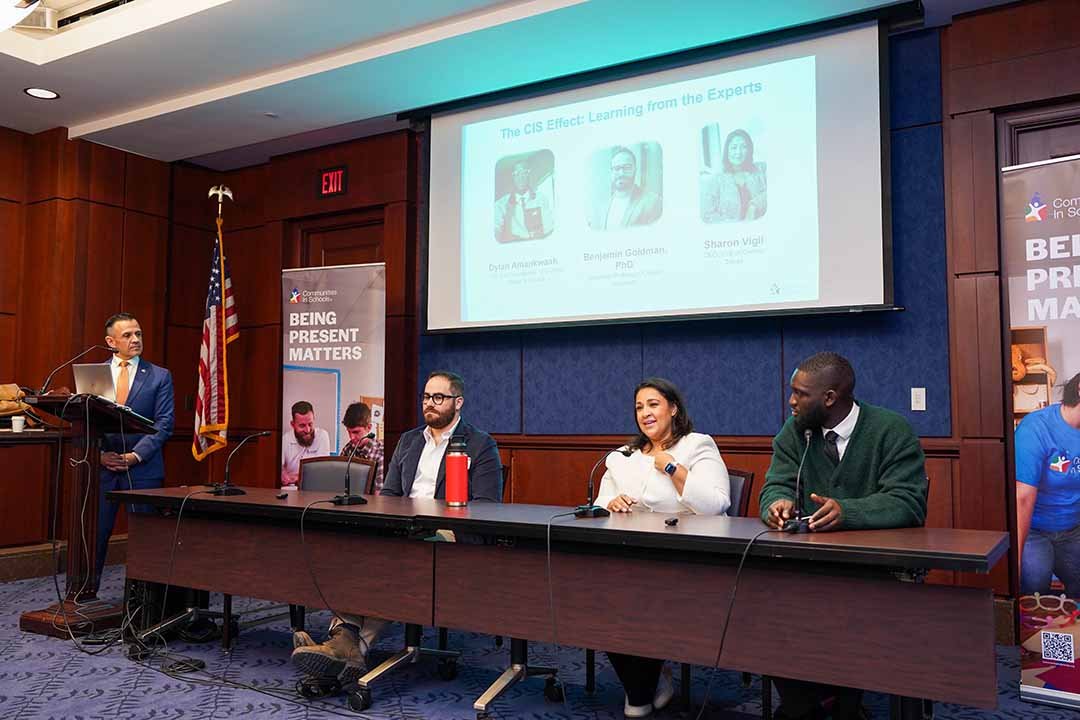
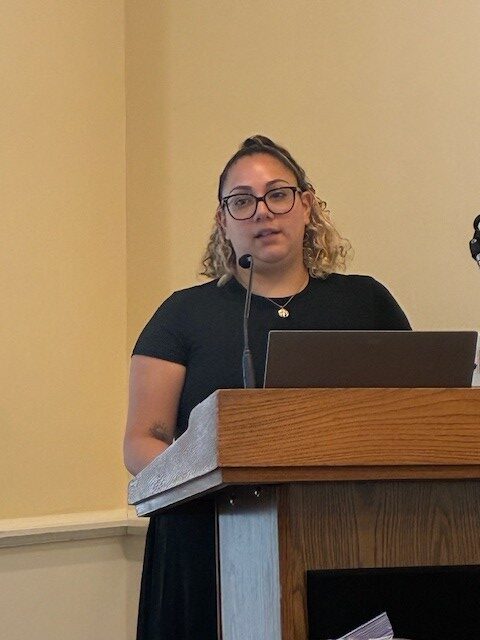
L to R: Joaquin Tamayo, Acting VP of Policy and MarCom, CIS National; Benjamin Goldman, Assistant Professor of Economics and Public Policy at Cornell University and Research Affiliate at EdRedesign; Sharon Vigil, CEO, CIS of Central Texas; Dylan Amankwaah, Site Coordinator, CIS of the Nation’s Capital


On Tuesday, March 3, policymakers, press, and education leaders gathered at the U.S. Capitol Visitors Center for a special briefing: “The CIS Effect: How Integrated Student Supports Create Economic Opportunity in America.”

The centerpiece was the federal debut of groundbreaking new research conducted by Opportunity Insights in partnership with the EdRedesign Lab at the Harvard Graduate School of Education. Authored by Benjamin Goldman, Assistant Professor of Economics and Public Policy at Cornell University and Research Affiliate at EdRedesign; and Jamie Gracie, Postdoctoral Fellow at EdRedesign, the study is the first of its kind to track CIS students into adulthood and measure real, long-term economic outcomes.

Research findings reframe integrated student supports not as a social program, but as critical economic infrastructure with measurable, lasting returns for both students and taxpayers.

The briefing featured a powerful lineup of speakers:

Bill Milliken, Founder and Vice Chair of Communities In Schools, shared reflections on his advocacy efforts that have guided CIS for nearly five decades. Sharon Vigil, CEO of Communities In Schools of Central Texas, offered a practitioner’s perspective on what the model looks like in action. And Dylan Amankwaah, a third-year Site Coordinator with Communities In Schools of the Nation’s Capital, gave voice to the work on the ground and the students behind the data.

Opinion: Now is the time to support D.C.’s community schools

Eboni-Rose Thompson is a fifth-generation Washingtonian. She lives in the Fort Dupont neighborhood with her dog, Kimba. A seasoned social impact and education leader, Eboni-Rose serves as the Ward 7 Representative on the DC State Board of Education.


We’re in a pickle, D.C.

This fall, the federal government shutdown delayed benefits for millions of Americans that receive Supplemental Nutrition Assistance, or SNAP. This essential safety net helps provide groceries for people who might otherwise struggle to feed themselves and their children. States and advocates rushed to court to force a remedy.

Here in D.C., Mayor Muriel Bowser’s decision to use local funding to continue SNAP through the end of November was absolutely the right thing to do. For families who budgeted tightly around that monthly allotment, a skipped payment is not an abstraction. It is an empty refrigerator and a parent choosing between transit and groceries. Even with that local relief and a possible federal deal on the table, the harm has already rippled through families’ lives.

Many local households are still reeling from the devastation caused by DOGE cuts, furloughs, and the toll of working without pay during the shutdown. Add to that the reality that D.C. is among the slowest in the nation at processing new SNAP applications, and families’ misfortunes are compounding by the week. In our communities, Black women, who are more often the heads of household, bear the brunt of this economic instability, heavily employed in federal roles and targeted by anti-DEI policies across the workforce. Our families and communities need solutions that are accessible, trusted, and close to home.

That is why community schools — which DCPS defines as schools that act as “resource hubs” and work to meet student needs inside and outside the classroom — are so essential.

Here in Washington, D.C., and especially in my home community, Ward 7, the economic impact is amplified by geography and history. East of the river continues to be a food desert with far fewer full-service grocery stores than other parts of the city. That structural gap is why local food banks, school-based markets, and mutual-aid networks are already stretched to meet the surge in need. Roughly one in four Ward 7 households rely on SNAP benefits, which means thousands of families were one policy decision away from losing their grocery lifeline overnight.

Additionally, truancy and chronic absenteeism have been persistent problems in the District. At a recent D.C. Council roundtable on attendance, councilmembers asked why students skip school. The answers were not only about transportation, safety, illness, or discipline. Children miss school when their homes are chaotic with food insecurity, when parents are anxious about immigration enforcement or sudden police actions, or when preschool programs close because federal funds stop. A child who goes to bed hungry or worries about a parent’s safety is not ready to learn, and absenteeism follows. Food security, family stability, and school attendance are the same problem seen from different doors.

Community schools are the obvious key to opening those doors. I have seen firsthand at funded community schools — like Kimball Elementary, which has a food pantry and washing machines — investments that get our students in the schoolhouse door and learning. They are not band-aids; they are hubs. A community school coordinates on-site health and mental-health supports, breakfast and after-school meals, family resource centers, and partnerships with local food banks and mutual-aid groups. When SNAP is paused, a school market run in partnership with programs like Communities in Schools or the Latin American Youth Center, a mobile distribution organized with Capital Area Food Bank, or a neighborhood mutual-aid delivery arranged through DC Food Project can mean the difference between a child showing up ready to learn or staying home hungry.

We should also be clear about funding. While federal policy matters, and Congress’s choices right now are hurting millions, most day-to-day education dollars for our schools are raised and spent locally. That means D.C.’s choices matter enormously. If the federal department is weakened, the local investments we make in community schools, in family supports, and in public-sector partnerships are the buffer that keeps neighborhoods from unraveling.

So yes, we are in a pickle. Pickles are preserved by quick, wise action. Expand community-school supports. Stand up emergency school-linked food distributions. Fund community schools. When you do, you fund caseworkers who can connect families to the Capital Area Food Bank, Martha’s Table, DC Food Project, and local pantries, or better yet, bring the pantries to families at school. When the federal safety net falters, locally rooted community schools are the resilience strategy that keeps children fed, families calm, and students in school where they belong.

“So Glad You’re Here”: A Warm Welcome for DC Students Amid Uncertainty

Pictured: Site Coordinator LaTroy Bailey welcomes a student at Brookland Middle School  

As the sun rose over Washington, DC, on the first day of school, the streets buzzed with a familiar rhythm: buses humming, crosswalks filling, and backpacks slung over shoulders. For many students returning this year, there was more than just the usual first-day nerves. Uncertainty hung in the air, influenced by the broader community challenges facing the city and the well-being of its youth. Yet, inside the schools, a different atmosphere awaited—one filled with warmth, reassurance, and joy.

Across the city, with school staff, Communities In Schools (CIS) Site Coordinators stood ready, eager to welcome their students with open arms, friendly smiles, and a clear message: You belong here. You are safe. You are supported.

At Brookland Middle School, that message came to life through the care and presence of CISNCAP Site Coordinator LaTroy Bailey. Stationed right at the school’s entrance, LaTroy greeted each student by name. She handed every student a lanyard and card holder, a simple but thoughtful gesture. It was a small gesture with a significant impact—one rooted in understanding the everyday challenges her students face.Many Brookland students rely on Metro to get to school, and too often, their Metro cards go missing in the shuffle of backpacks and lockers.  I knew a lot of them would forget or lose their Metro cards by next week,” she said with a laugh. “So we’re starting the year prepared.”

It wasn’t just the lanyards that stood out; it was LaTroy’s energy, her presence, and her words that made an impression. “Let’s start this year right,” LaTroy told them with a beaming smile. “You’ve got this, and if you need anything, you know where to find me.” And they did. New students were taken to her office personally, ensuring they felt comfortable seeking her out. Returning students gave her hugs or fist-bumps.

All across the city, CISNCAP Site Coordinators echoed that same spirit, offering affirmation, encouragement, and essential resources like school supplies, hygiene products, and uniforms. Whether a student needed help navigating their schedule, a quiet moment to breathe, or just a familiar face in a sea of new ones, CISNCAP Site Coordinators are there.

In a time when uncertainty can feel overwhelming for young people in Washington, DC, the first day of school reminds us of the profound power of presence. CISNCAP Site Coordinators, like LaTroy Bailey, are more than employees; they are anchors, mentors, and champions for our students. Thanks to their unwavering commitment, students across Washington, DC didn’t just walk back into school; they stepped into a community that sees their potential, believes in their dreams, and stands beside them every step of the way.


Site Coordinator Spotlight: Aylin Reyes

Site Coordinator Spotlight: Aylin Reyes

Every morning, before the first bell rings, Ms. Reyes is already walking the halls, greeting students by name, checking in with teachers, and reviewing her ever-changing to-do list. As the Site Coordinator for Communities In Schools Nation’s Capital, Aylin plays a pivotal role in ensuring that students have the support they need to succeed, academically, socially, and emotionally.

From Passion to Purpose

Aylin has always known she wanted to work with young people. “I grew up in this community,” she says. “I saw how just one adult believing in a kid could change the course of their life. I wanted to be that person.” After working as a primary school teacher for several years, she joined CIS in 2024.

A Day in the Life

No two days are the same, and that’s just how Aylin likes it. “One minute I’m helping a student apply for a summer job, the next I’m facilitating a parent meeting or organizing a clothing drive,” she explains. Her work revolves around building trust, something she’s done masterfully with both students and staff. “Aylin is the glue here,” says assistant Principal Trejo. “She brings resources and heart to our community in a way that truly lifts everyone.”

A Story That Stuck

Aylin lights up when asked to share a student success story. She recalls a quiet tenth-grader Josue, who struggled with attendance and anxiety. “He barely spoke at first,” she says. “But over time, through weekly check-ins, a small peer support group, and coordination with his counselor, he started to find his voice.” This past spring, Josue presented at a school assembly. “Seeing him speak in front of his classmates brought tears to my eyes.”

Looking Ahead

When asked what she hopes for the future, Aylin doesn’t hesitate. “I want every student here to feel seen and supported, no matter what they’re going through,” she says. She’s also excited about piloting a new summer college and career prep program with fellow site coordinators, designed to help rising seniors develop a post-secondary plan.

Aylin reminds us what CIS is all about: building relationships that empower students to stay in school and achieve in life.

Thank You! Funding Restored

On behalf of the students we serve, our dedicated site coordinators, school partners, CISNCAP staff, stakeholders, and Board of Directors, we sincerely thank you for restoring the OSSE Community School Initiative budget.

As the new school year begins, we express our gratitude to Chairman Mendelson and the DC Council members who took time out of their busy schedules to learn about the mission and impact of Communities In Schools of the Nation’s Capital (CISNCAP).

In the 2024–2025 school year, CISNCAP provided Tier 1 supports to 20,242 students across 11 schools. However, our impact extends far beyond just numbers.

Every school supported by CISNCAP experienced improvements in student attendance. We know that genuine academic and behavioral growth occurs only when students feel safe, supported, and acknowledged. Among the students we worked with directly:

– 90% improved their attendance

– 85% demonstrated growth in social-emotional learning

– 48% showed improved behavior

– 42% made academic gains

These outcomes highlight what is possible when we invest in the whole child.

We remain committed to expanding our reach and addressing both the academic and non-academic needs of even more students across the District. Your continued support makes that possible.

Thank you for believing in our students and the power of community-based support.

20th Anniversary Reception

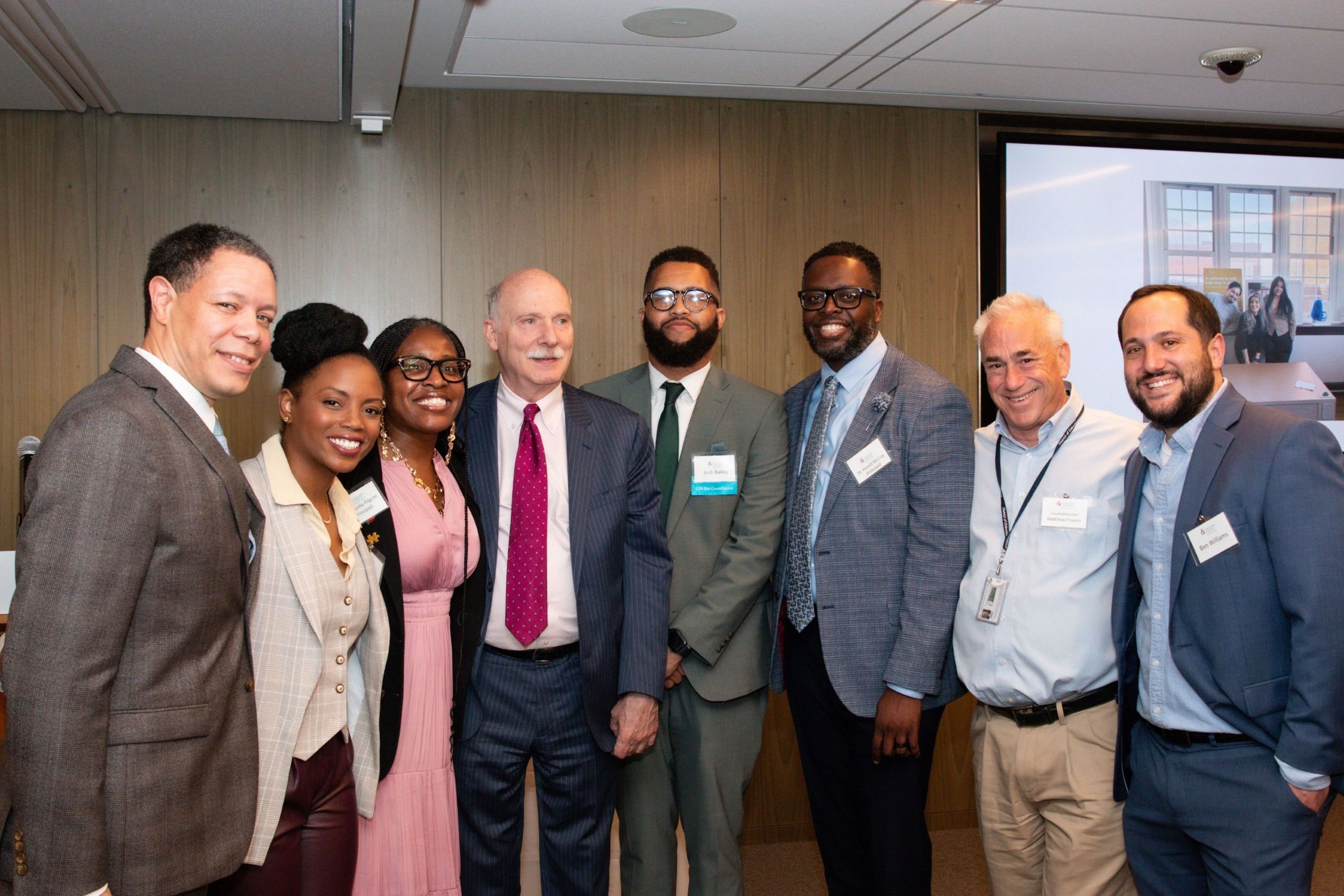
Pictured l-r: Principal Allen Richardson, Renee Kube and Liz Collins of Children Incorporated, Dr. Rustin Lewis, DC Council Chair Phil Mendelson, CISNCAP Board Chair Margaret Vassilikos, Impact Awardees John and Ann Gardner.


What an incredible evening it was!

We sincerely thank DC Council Chairman Phil Mendelson for joining us and delivering such inspiring remarks. His presence truly elevated the event.

Congratulations to Michael Hager for winning the exciting raffle prize: the use of Suite 326 at Capital One Arena for the Washington Capitals game against the Columbus Blue Jackets—their final regular-season home game.

We also proudly celebrated our esteemed honorees:

  • John and Ann Gardner – recipients of the Impact Award
  • Allen Richardson –  Principal of the Year Award  
  • Children Incorporated – Community Partner Award

Their contributions embody the spirit and mission of CISNCAP, and it is an honor to recognize their incredible efforts.

The impact of CISNCAP continues to grow, driven by the unwavering dedication of our community. Together, we are breaking down barriers for students and paving the way for their success. Last year, we proudly saw 100% of our 12th-grade students graduate—a milestone that speaks volumes about the power of collective action.

CISNCAP Takes To The Hill

Communities In Schools of the Nation’s Capital staff joined several EmpowerEd, Board of Education members, the Washington Teachers’ Union, and other groups at the Hart Senate Office Building to passionately advocate against Congress’ continuing resolution (CR). Several speakers emphasized the importance of the Community in Schools program.

DC families protesting federal spending bill with Recess on the Capitol | wusa9.com


CISNCAP Joins Rally To Protect Funding For Community Schools

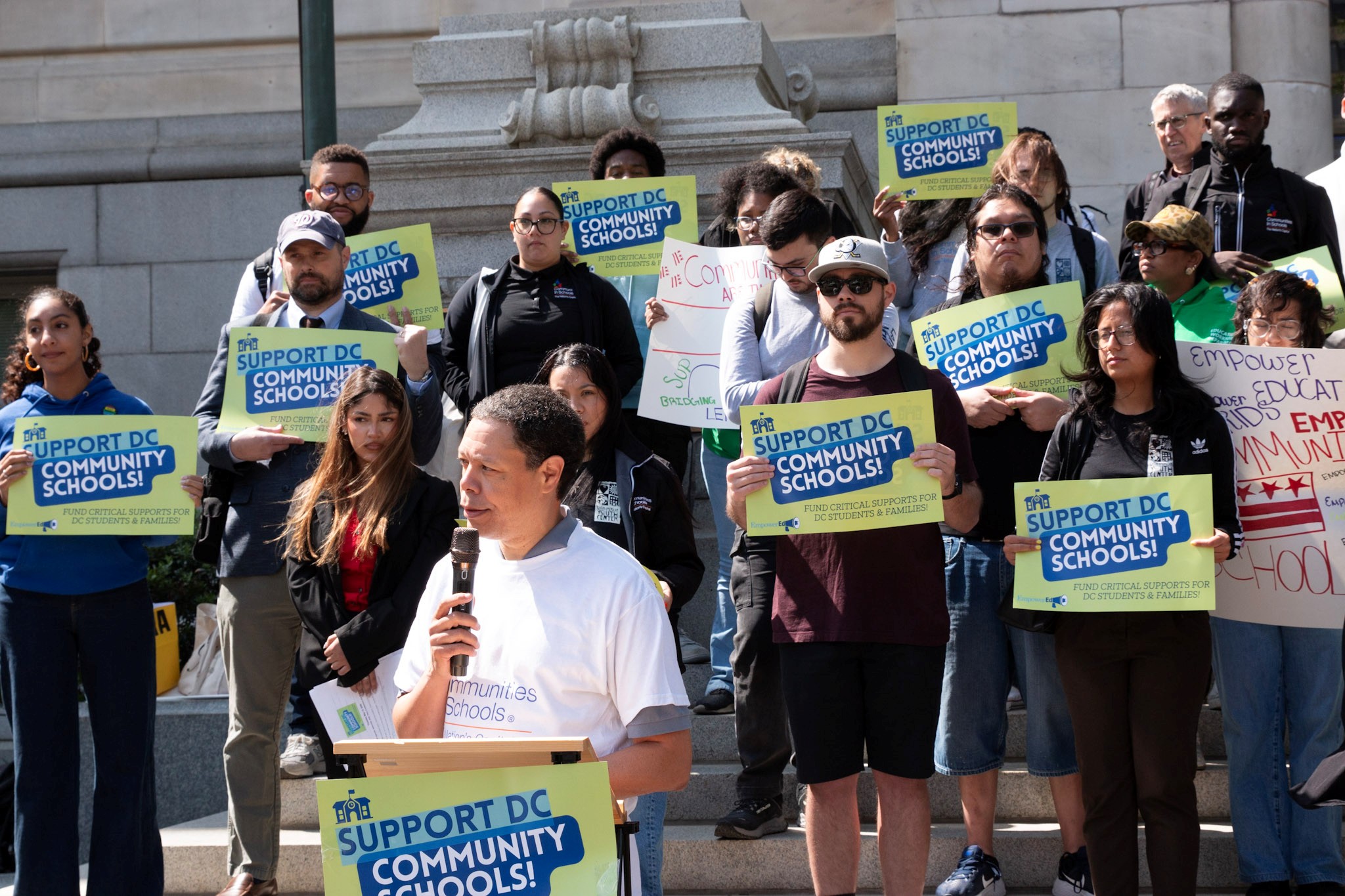
Communities In Schools of the Nation’s Capital has been at the forefront of the movement to uplift DC Community Schools in partnership with Empower Ed, the Latin American Youth Center, Mary’s Center, and the Washington Teachers Union.

On March 13, these organizations united in a powerful rally at the John A. Wilson Building, amplifying the call to protect critical funding for DC schools. The event featured inspiring remarks from key leaders, including Ed Goldstein, Executive Director of Empower Ed; Dr. Rustin Lewis, Executive Director of Communities In Schools; Adonis Garcia, Site Coordinator at Communities In Schools; Jacqueline Pogue-Lyons, President of the Washington Teachers Union; Dr. Jacque Patterson, President of the State Board of Education; Eboni-Rose Thompson, Vice President of the State Board of Education; Councilmember Brianne Nadeau; and Ricardo Garcia, Coordinator at Tubman Elementary. Several students also took the stage, lending their voices to this urgent cause.

This rally, planned months in advance, is a powerful response to Congress’s attempt to cut $1 billion from DC’s budget—critical funds generated by local tax dollars that sustain our schools. The potential loss of $350 million threatens to result in teacher furloughs and the loss of critical student services like special education and mental health support in the middle of the school year and into the future.

Dr. Lewis said, “…By overcoming these barriers [food insecurity, homelessness, academic performance barriers, and mental health issues], teachers can teach, students can learn, chronic absenteeism rates decrease, and public safety improves. The true Return on Investment for our District and our nation lies in our commitment to ensuring that every student has the opportunity to succeed. Adonis Garcia, a former CIS student and now a dedicated CIS Site Coordinator, embodies this vision.”

Mr. Garcia’s comments echoed Dr. Lewis, “I am living proof of the impact CIS can have on an individual. As a student, I had a CIS site coordinator who guided, supported, and believed in me. That support system helped me achieve what I consider success. More than that, CIS gave me a community that shaped me into the person I am today. For many bilingual students, CIS is more than just a program; it is a lifeline. It provides access to essential resources and opportunities that might otherwise be out of reach. This work is not just important—it is essential. “

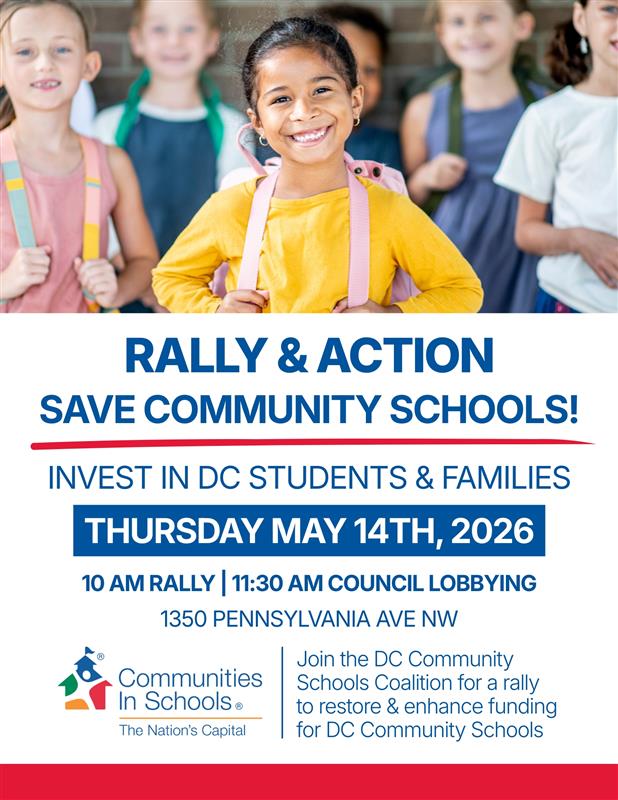
Join the Community Schools Coalition for a rally and day of action!

Community schools provide critical wraparound services to students and families: everything from health care, mental care, and dental care to clothing banks and food pantries. Already, 97% of schools in Baltimore are community schools, but less than a quarter of DC’s schools are able to provide community schools programming, and last year, community advocacy showed the city the need to maintain our Community Schools program. The Community Schools Coalition believes all schools should be community schools, and we need your help to make it happen! Join us in our fight to expand Community Schools programming in our city so we can better serve our students and families.

10:00am— Rally on steps of Wilson Building

11:30am-1:30pm– Share your stories with DC Council members

Students, educators, families and community members encouraged to attend!

Sponsored by the Community Schools Coalition: Communities in Schools of the Nation’s Capital, EmpowerEd, Latin American Youth Center, Mary’s CenterWTU